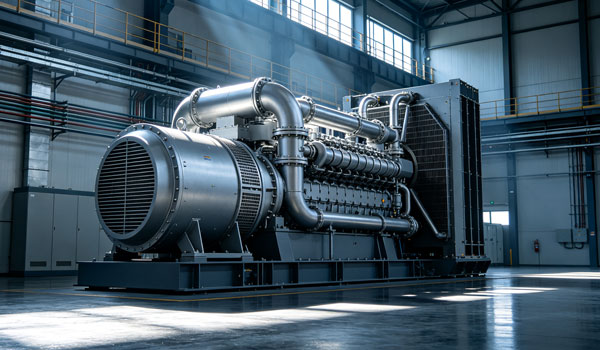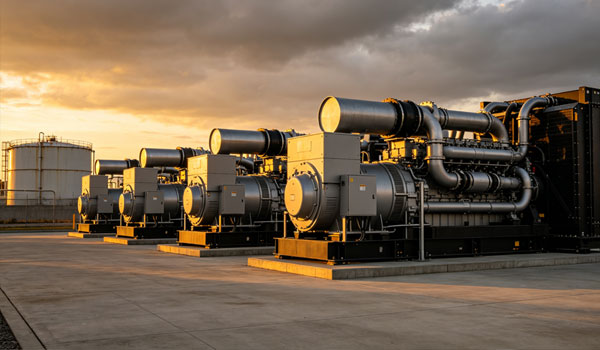

Do you know the function of the gas engine control system?
The core function of the gas engine control system (a reciprocating engine powered by natural gas/biogas and other gas fuels) is to ensure stable operation of the engine in a safe, efficient, and low emission state through real-time monitoring and closed-loop control of key operating parameters.
Accurate control of combustion process
Dynamically adjust the air-fuel ratio (especially relying on oxygen sensors to achieve lambda closed-loop control) and match the characteristics of gas fuel;
Accurately control ignition timing and ignition energy, adapt to different load/speed conditions, and avoid misfire or detonation;
Manage gas injection quantity and timing (including coordination of high-pressure/low-pressure gas supply systems).
Performance and Economic Optimization
Improve power output stability and response speed;
Reduce unit energy consumption and improve thermal efficiency;
Implement strategies such as idle stability, cold start compensation, acceleration intensification, deceleration and gas interruption.
Emission and environmental compliance
The collaborative three-way catalyst works to strictly control pollutants such as NOx, CH (unburned methane), CO, etc;
Support post treatment linkage control such as exhaust gas recirculation (EGR) and secondary air injection.
Security protection and fault-tolerant operation
Real time monitoring of anomalies such as detonation, overheating, overpressure, and gas leakage, triggering torque limit, load reduction, or shutdown protection;
Equipped with failure protection (such as activating substitute values in case of sensor failure) and emergency backup mode to ensure that it can be driven away/stopped;
Fault self diagnosis (storing DTC codes) and prompting maintenance requirements.
Note: It needs to be distinguished from gas turbine control systems (used for large-scale power generation/aviation propulsion, focusing on speed power stator blade linkage regulation); This answer is for common industrial/automotive reciprocating gas engines. The system usually consists of sensors → ECU → actuators to form a closed loop, and the core algorithm needs to adapt to the characteristics of gas fuel such as low density, high octane value, and large ignition delay.
Prev:What are the five major systems of a gas engine?
Next:None'